
We Inspect The Crack Or Foundation Issue
Aquatight checks the visible crack, staining, dampness, water entry point, wall condition, floor condition, and surrounding foundation area.

Aquatight Basements repairs basement and foundation cracks using professional polyurethane foam and epoxy injection systems, with interior and exterior repair options depending on the crack, access, and severity of the problem.
Aquatight repairs cracks in concrete, block, and stone foundations, and can also assess larger foundation issues such as bowing walls, floor cracks, foundation heave, and structural movement.
We call back within 24 hours. No obligation.
Nova Scotia's heavy rain, snowmelt, freeze-thaw cycles, and changing soil conditions can put pressure on your foundation and make cracks worse over time.
If you notice water, staining, dampness, musty smells, or white powdery residue near a crack, it may be more than a cosmetic issue. Aquatight can inspect the crack, identify whether water is getting in, and recommend the right repair before the problem spreads.
Common signs include:
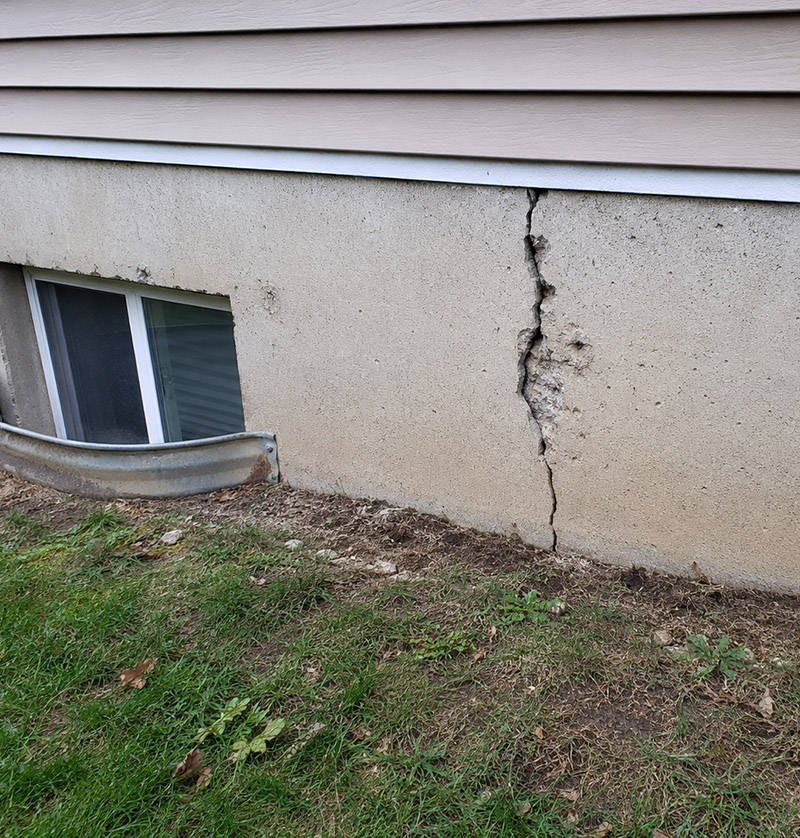
That is why terms like basement crack repair, basement wall crack repair, and foundation crack repair often refer to the same problem: a crack in the concrete, block, or stone foundation wall that may allow water into the home.
If the wall is finished with drywall or other materials, Aquatight may need to inspect further to determine whether the issue is cosmetic, moisture-related, or connected to the foundation behind it.
Aquatight repairs basement and foundation cracks from the inside in many cases. Exterior excavation may be recommended when the crack cannot be properly repaired from inside, when exterior access is required, or when the crack is too wide for interior polyurethane foam or epoxy injection.
Book a Free Basement Waterproofing Estimate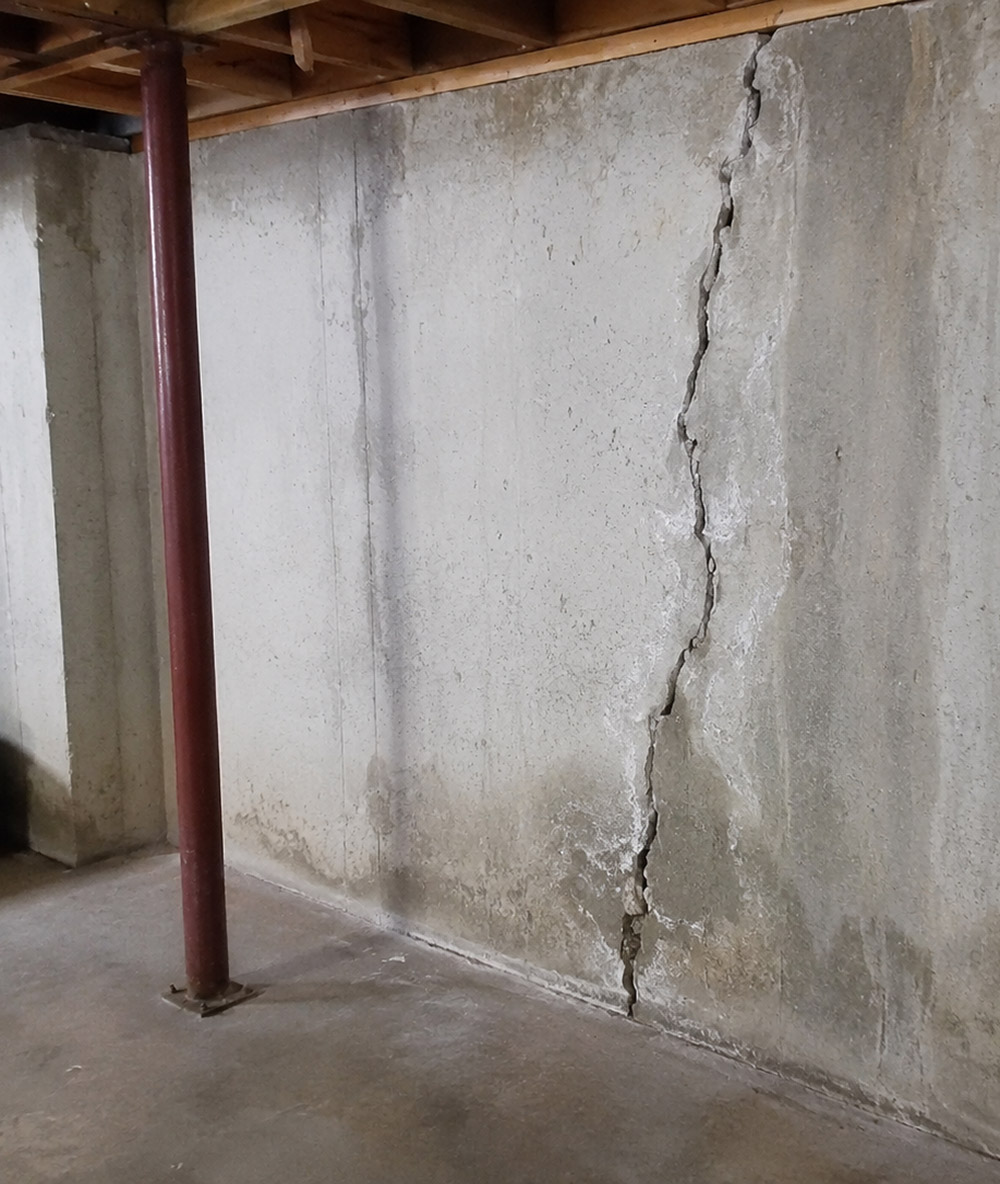
Aquatight completes most foundation crack repairs from inside the basement when the crack is accessible and the repair method is appropriate. About 90% of foundation crack repairs can be completed from the inside, depending on the crack location, outside access, crack width, and foundation condition.
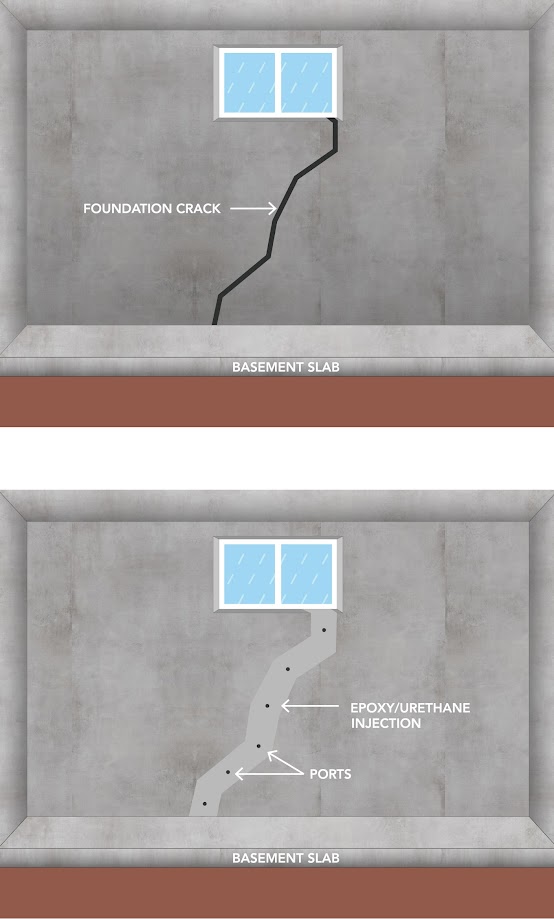
For interior repairs, Aquatight uses polyurethane foam injection and epoxy injection. Both methods can help stop water from entering through cracks, but they are used for different situations.
The right injection method depends on the type of crack, whether water is actively entering, the width of the crack, and whether the repair needs to provide structural reinforcement.
Services may include:
Polyurethane Foam Injection
Polyurethane foam injection is commonly used for leaking foundation cracks where water is entering the basement. The foam expands inside the crack to help seal the path where water is getting through.
Epoxy Injection
Epoxy injection is used for structural reinforcing as well as waterproofing. It is the higher-end crack injection option and may be recommended when the crack requires added strength in addition to water resistance.
Although most foundation crack repairs can be completed from the inside, exterior excavation may be needed in some situations. If the crack is too wide for polyurethane foam or epoxy injection, if the outside of the foundation needs to be accessed, or if the problem appears to be more structural than water infiltration, Aquatight may recommend an exterior repair approach.
Exterior crack repair allows the foundation wall to be exposed, repaired from the outside, and protected with waterproofing where needed.
Water pressure around the foundation, poor drainage, clogged or failing drain tile, freeze-thaw movement, and heavy rain can all contribute to basement leaks.
If Aquatight finds that the crack is only part of the problem, they may recommend additional waterproofing, drainage, sump pump, or structural repair solutions.
If drainage around the home is poor or water pressure builds around the foundation, cracks and weak points can start to leak.
That is why basement leak and crack repair should look at the full water problem, not just the visible crack. Aquatight can assess whether water is entering through a wall crack, along the floor/wall joint, through the basement floor, or because of drainage issues around the foundation.
Aquatight repairs and addresses a range of foundation concerns, including bowing or leaning walls, foundation heave, uneven basement floors, crumbling concrete or block foundations, stone foundation issues, and structural movement.
Depending on the issue, Aquatight may recommend wall stabilization, concrete stitching, carbon fibre straps, steel beams, support beams, underpinning, waterproofing, drainage improvements, or another repair approach.
Aquatight does not install helical piers or wall anchors. If the home or ground beneath it appears to be settling, if pier work may be required, or if the right repair is not immediately clear, Aquatight may recommend a structural engineer or specialized contractor for a professional opinion and next steps. Major structural work or severely deteriorated old stone foundations may also require referral.
How It Works
Aquatight checks the visible crack, staining, dampness, water entry point, wall condition, floor condition, and surrounding foundation area.
The team looks at whether the problem appears to be water infiltration, hydrostatic pressure, drainage failure, foundation movement, structural stress, or another issue.
Aquatight explains whether polyurethane foam injection, epoxy injection, exterior excavation, waterproofing, drainage, sump pump work, wall stabilization, or further structural assessment is recommended.
When appropriate, the crack is repaired from the inside. If exterior repair, waterproofing, drainage, or structural repair is needed, Aquatight will explain the next step and complete the recommended work where it falls within their service scope.
Why Choose Us
Aquatight Basements helps Nova Scotia homeowners find the source of the problem and choose the right repair.
Click a question to see the answer.
In many cases, yes. Aquatight completes most foundation crack repairs from inside the basement when the crack is accessible and the repair method is appropriate. Polyurethane foam injection or epoxy injection may be used depending on the crack, leak, and repair needs.
Often, yes. If the crack is in the concrete, block, or stone foundation wall visible from inside the basement, it is typically a foundation wall crack. If the crack is only in drywall or finished wall material, further inspection may be needed to find the cause.
Polyurethane foam injection is commonly used to stop water from entering through leaking cracks. Epoxy injection can provide structural reinforcement as well as waterproofing and is typically the higher-end crack injection option. Aquatight will recommend the appropriate method after inspecting the crack.
No. Many leaking cracks can be repaired from inside. Exterior excavation may be needed if the crack is too wide for interior injection, if the crack cannot be accessed properly from inside, or if exterior waterproofing or drainage is required.
Yes. Aquatight repairs horizontal, vertical, and stair-step foundation cracks. The recommended repair depends on the crack type, width, location, moisture conditions, and whether there are signs of structural movement.
Yes. Aquatight repairs cracks in concrete, block, and stone foundations. If the stone foundation is severely deteriorated and would require supporting or jacking the house and removing the foundation, Aquatight may refer the homeowner to a specialized contractor or engineer.
Water coming up through the basement floor may be caused by hydrostatic pressure beneath the slab. Aquatight can address this with an interior drain tile system and can repair basement floor cracks with epoxy where appropriate.
Yes. Aquatight can address bowing or leaning foundation walls and may recommend wall stabilization, carbon fibre straps, steel beams, support beams, concrete stitching, underpinning, drainage, or waterproofing depending on the issue.
Yes. Aquatight works on stone foundations. If a stone foundation is severely deteriorated and would require supporting or jacking the house and removing the foundation, Aquatight may refer the homeowner to a specialized contractor or engineer.
No. Aquatight does not install helical piers or wall anchors. If the home or ground beneath it is settling, or pier work may be required, Aquatight may recommend a structural engineer or specialized contractor.
Yes, it is worth having it inspected. Small cracks can worsen over time, especially with freeze-thaw cycles, heavy rain, snowmelt, and shifting soil conditions.
Free Estimate
Every estimate includes a thorough inspection, an honest assessment, and clear pricing. Completely free, with no obligation.
We serve homeowners across Nova Scotia, from Antigonish to Digby, including Halifax, New Minas, Middleton, and surrounding communities.
We call back within 24 hours. No obligation.